Showing posts with label Hindu. Show all posts

Study of the Bhagavad Gita

http://www.radhadesh.com/sites/default/files/imagecache/full_content_no_sidebars/Bhagavad-Gita_0.gif
The decision of the government to introduce study of the Bhagavad Gita in government schools has evoked resentment, and a majority of the people, whose opinions were sought, were opposed to it.

The arrest of a leader who had protested against the preaching of the spiritual contents of the Gita in a junior college in Kolar by Gangadhareshwara Saraswati Swamiji, has fuelled the resentment further.

V Ambarish, Kolar district president of Students Federation of India, who was arrested in connection with the above incident, began fast at the local jail, demanding the arrest of the Swamiji. In view of the furore, the Bhagavad Gita campaign has been put on hold in Chikballapur district for the present. The programme has faced stiff resistance in Kolar and Chikballapur districts.

Various scholars including Prof G Venkatsubbaiah and Nirananjan Aradhya, educationist, Dr Mahabaleshwar Rao, veteran writers, Hampa Nagarajaiah and  Amrit Someshar and also former Kannada Sahitya Parishat president, Chandrashekhar Patil, have opposed the move, with some of them even terming it anti-constitutional. Wakf minister, Mumtaz Ali Khan, opines that it would be better, if alongside the Bhagavad Gita, teaching of the Quran and the Bible is also introduced in schools, as all the religions preach the same principles.

While the programme has reportedly received good response in some districts, there are others who term it as an attempt at saffronization of education. Minister for primary and secondary education, Vishweshwar Hegde Kageri, claims that this programme was awaiting clearance since long, and that this campaign is aimed at preaching moral and ethical values to the children when they are young. Stressing that the Bhagavad Gita is universally acclaimed book without religious overtones, he said that the programme is not backed by any hidden agenda.

Richest god in the world/ god rich


Gold ornaments, gold and silver coins, stone studded crowns, idols and figurines inlaid with precious stones and jewels estimated to be worth a whopping over Rs.90,000 crore have been found from the cellars of Sree Padmanabhaswamy temple here.

With one more "secret" vault yet to be opened, the figure in all likelihood will go up further. But sources said the figures could only be speculation as it wasn't possible to determine the antique value of the precious gems and jewellery. "These are antique pieces and it's not possible to determine their prices," said historian and former director of Indian Council of Historical Research M G S Narayanan. In other words, the worth of the treasure could be intimidatingly higher.

The Supreme Court-appointed committee on Sunday refused to confirm reports about the value of the recoveries, saying that its mandate is limited to making an inventory of the assets.

Kerala chief minister Oommen Chandy said the treasure would remain with the temple. "The wealth belonged to the temple and it will be preserved where it was found. There is religious and historical significance to the findings. The state will ensure its security," Chandy told reporters on Sunday.

Chandy said the police would patrol the shrine 24X7 and a control room had already started functioning. "Permanent security arrangements will be put in place only after consultations with the chief priest of the temple and the Travancore king who is the caretaker of the shrine," the CM said.

A source said the seven-member panel was stunned by what it found in the secret vault marked `A' during its inspection on Thursday. There were close to 1,000 kg of gold coins, some of these from the East India Company era and Napolean's period, about one tonne of gold in the form of rice trinkets, sack full of diamonds said to be from Burma and Sri Lanka, a rope made of gold and thousands of pieces of rare 'sarappoli' necklaces.


The stock-taking continued next day as only 30% of the assets could be counted on Thursday. Again there were surprises in the form of a three-and-a-half feet tall idol of Lord Vishnu studded with diamonds, emeralds and rubies, an 18-feet-long ornament used to adorn the deity and weighing 35 kg and 1 feet tall human figurines weighing 1 kg each. There were coins marked 1772 indicating they were from the era of former Travancore ruler Karthika Thirunal Rama Varma better known as `Dharma Raja' for his strict adherence to the rules of 'dharma'.

Entry was strictly forbidden for the media and public to the site. There are six vaults marked A to F in the shrine. The A and B cellars have never been opened after 1872. The panel had set out on the job on June 27 and opened three vaults marked C, D and F till Wednesday.

The observers, retired Kerala high court judge Justice M N Krishnan and Justice C S Rajan, said it was difficult give an exact date when the stock-taking would be completed. The B and E vaults remain to be opened.


Narayanan said there were specific documents called 'Mathilakam records' which speak about the history of the shrine and about how the assets came into it. "The temple has been known since the 9th Century and figures in the writings of that time. Native ruler of Travancore (then pricely state) Marthanda Varma had given away all the wealth to the deity and ruled the kingdom as the Lord's agent."

"Travancore was a very prosperous state and with its port facilities, traded in spices, sandalwood and ivory. The foreign currency recovered from the vaults may have come in through the trade route," he added.

the second avatar Sri Sathya Sai Doddamalur


The tiny village of Doddamalur, off the Bangalore-Mysore highway, will definitely be in the news in the coming years, with scores of stories doing the rounds here over the reincarnation of Sathya Sai Baba as Prema Sai.

What has lent credence to claims of people of the Vaishnava sect temples of Aprameya (Vishnu) and Ambegalu Krishna (toddler Krishna) is based on a book `Sri Sathya Sai -- Anandasai' authored by one Swami, an ardent devotee of Sai Baba. In that, he claims that the godman, during his visit to Doddamalur, had told him that Sai Baba had three avatars in kalyug, and of them, he is the second avatar (reincarnation) of Shirdi Sai Baba. The third will be Prema Sai and he will be born in this village. He also claims that Baba, during his visit in the '60s, showed a small house where he will be born.


However, confusion prevails among people who are making claims of Baba's reincarnation in the village. According to Ramadas, who runs a Krishna charitable trust, Prema Sai will be born in this village after 2023, as predicted by Sathya Sai Baba. Ramadas said Baba had predicted that his personal assistant, Narayan Kasturi, who died long ago, will reincarnate himself as a woman in a village near Bhadravathi, marry a person from this village and give birth to Prema Sai. "Today you are my assistant, in the next life you will be my mother,'' Sai Baba is supposed to have said.


Doddamalur, located on the banks of the river Kanva, will be called Gunaparthy after the reincarnation, said Raghav, an aged villager, disclosing that the soil and water of the village have curative powers. The village will be called Gun (cure) parthy (place) in the years to come.

bhagavan sri sathya sai baba / puttaparthi sathya sai baba


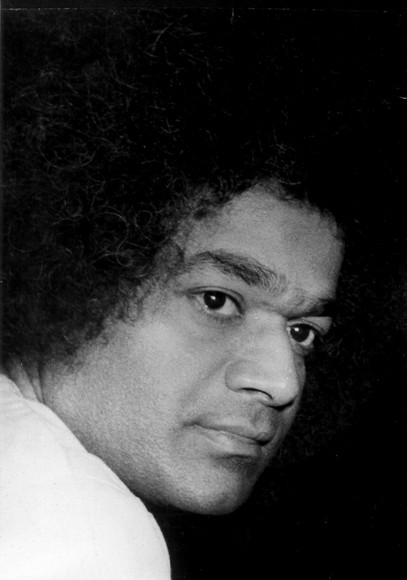
Sathya Sai Baba is the second of three incarnations of the Sai Avatâr.  The first was Shirdi Sai Baba, who left his mortal body in 1918, after teaching the unity of God and brotherhood of man His whole life.

In particular, He did this among the Hindu- and Muslim-communities in Central India, who on their side considered Him as one of them.  Sathyanarayana Raju, as Sai Baba was named, was born on November 23, 1926, [at 6:36 hours a.m.] in a small remote village called Puttaparthi in the South of India, approximately 160 km north of Bangalore.

There is now His Âs'ram named Prasanthi Nilayam, which means: Place of Supreme Peace. In Whitefield, about 25 km of Bangalore, Baba also has an Âs'ram where He regularly stays. This Âs'ram is called Brindavan (after Vrindâvana, the town of Vrindâvana in the Mathurâ District of Uttar Pradesh, India, where Krishna appeared five thousand years ago).

He came into the world with all knowledge, wisdom, power and divine love. Unlike self-realized saints, He did not have to practice disciplines or austerities to achieve his divinity. Although Sai Baba only attended school to the age of thirteen, he has complete mastery of the scriptures, of all the sciences, arts, languages - of all fields of study. As a matter of fact, he knows everything - including the past, present and future of all of our lives.

Sathya Sai Baba has millions of followers in India, as well as in many countries around the world. He has incarnated at this time to restore truth, righteousness, peace and love in the world and to transform all our hearts so that we can experience that we, too, are divine.

"I have the task to lead mankind in her development and to assure all human beings of an existence full of happiness and joy. I have promised that I shall rescue all who roam about uselessly, and bring them back to goodness." - Sathya Sai Baba

Sai Baba says that He will stay in the present quality as Sathya Sai Baba within the 21st century and will reach the age of 96. After that He will be reborn as the third and last incarnation as Prema Sai Baba, who will finish the Avatâra-mission started in the middle of the 19th century.


As a teacher He leads the spiritual development of all who turn to Him - by now, more than hundred million people, worldwide - and inspires people inwardly as well as outwardly. He has set up several schools and universities, where education is given totally for free. Also, He has built hospitals in several places where everybody receives free care and medication.

One of the most modern hospitals has been established in Puttaparthi, the Sri Sathya Sai Institute of Higher Medical Sciences - Prasanthigram. Also here, every treatment is completely given free of charge.  The name Sathya Sai Baba is significant. Sai means: Godly Mother, Baba: Honored Father, and Sathya: Truth. His mission: to bring back truth in all hearts, to regain righteousness all over the world.

 
The sarva-dharma symbol is the symbol of the Sathya Sai Organization. Sarva: all, Dharma: divine law, is equal to religion.
The first sarva-dharma symbol stands for a lotus flower with six leafs, with in every leaf the symbol for a world religion. Together these symbols represent all religions in the world.

The Pillar: the pillar (lotus) in the middle expresses the path of unity with God, with the several steps and phases one has to go forward. The blooming lotus is the heart that blossoms in love; this results in the flower of enlightenment.

The important verses about Krishna written in Bhagwat Gita.

http://www.freewebs.com/shaktiananda/The%20great%20central%20sun.jpg athama
I and you and others were present in earlier years also and shall be present in future years also. These bodies are parishable. Atman or Krishna can not be destroyed. Atman is not active, can not be cut, can not be vatted or dried. It is omnipresent and stationary. It can not be changed. All creations were without body before birth and without body after birth.

tatwa
Universe is part of Cosmos. Universe and cosmos can not be separated and so can not be destroyed. He , who knows meaning of Tatwa written in the Vedas or Books or Shashtra , knows Universe in reality. Brahma creates Devta, Human Being and Tiryak ( Birds, Animals, Reptiles , movable or non movable etc ). Since when it exists and till what period it may continue is not known. One should be free from desires ( Vasana ), attractions ( Mamta) and should try to find Param Ishwar or Param Atman. One should work hard. Area which can not receive light from Sun and Moon is where I live. ( This may be an indication that Atman is not part of skin. It may be heart or inside heart). Jeev Atman is part of my Atman. Jeev Atman attracts Tri Gun Maya. Mind and 5 Indriyan are attracted by Tri Gun Maya".Beautiful simlie is narrated here.

indriyan
As Air takes smell from one place to the other place, in the same way Jeev Atman takes mind and 5 indriyan to other body which it receives. ( Verse no 8 of Chapter 15 of bagavadgeeta). Knowledgeable persons know this theory of life. They know that Jeev Atman leaves one body and go to the other body fixed for Atman. Intelligent person tries and knows that Atman is situated in the heart of creation. Heat of Sun or Fire is part of my heat. My heat only enters in to earth and helps to grow vegetations or medicinal plants. With my heat in human body 4 types of different foods are digested. Body of human being is perishable and Jeev Atman is not perishable. Any person, who knows my theory of life, is intelligent person. Oh Arjun I have told you very secretive knowledge ."
keshava hindu gods lord krishna and radha satwik In chapter 16 of Gita-Krishna says " Now i shall explain you regarding Devic Wealth and Asuri Wealth. A person who is fearless, pure from inside, trying to know theory of life , Satwik donation, Control on desires, worshiping and performing good actions, not harming any one with words, body , or mind, truthful words, without anger or control on anger, feeling of no action done by me, Pardon, tolerance, no enmity all the said characteristics are of persons having Devic Wealth.

gita updesha wallpaper religious hindu gods lord krishna and radha desireOh Arjun Pride, Anger, Harsh words, are characteristics of persons of Asuri Wealth. Devi Wealth gives Moksha and Arjun you are having Devic wealth. Human being with Asuri nature person says that there is no God and world is created by combination of Men and women and human being should enjoy luxuries, fighting for wine, women and wealth and I have succeeded and I am the best . I shall do and I shall enjoy and attracted to wards desires and sex. These person get hell. Such type of persons get again and again Asuri Yoni. Sex, anger, greed takes a person to hell. So one should control desires and should achieve Param Gati."
wallpaper religious hindu gods lord krishna and radha kama artha There is connection between sex, anger and greed to instability of mind or brain. If one does not control sex, anger and greed then one may always get depressed. Sex , anger and greed are like fire. One can never be satisfied. There is no limit of wine drinking, women consuming, or wealth possessing. It all creates jealousy, hatred, anger and mind can never be stable. If mind is unstable or unsatisfied , it emits special type of electrons and all these electrons creates different amino acids and all this creates unhappiness. These are not the characteristics of scientist. Knowledge of Tatwa can not be gained by unstable mind. So to know theory of Tatwa or life one must work hard and should have control on desires and work hard and should be free from desires or craze to get more money or wealth. It does not mean that sex or wealth or wine is not good. One should work or act but should not be part of actions. All actions are part of destiny. So It is state of mind " doing actions but not involving in these actions" ( Involve means doing action without caring for results) bagavad gita

Holi and light bonfire in England


Hindus will celebrate colorful Holi festival on Clacton beach in England this year.
Clacton-On-Sea Shree Ram Mandir (Hindu Cultural and Heritage Centre) is organizing this event.
It will include lighting the bonfire and devotees gathering around it and sharing Holi legends.
Meanwhile, distinguished Hindu statesman Rajan Zed, in a statement in Nevada (USA) today, applauded efforts of Mandir leaders and Clacton and surrounding area community for keeping the ancient traditions of Hinduism alive.

Rajan Zed, who is President of Universal Society of Hinduism, further said that it was important to pass on Hindu spirituality, concepts and traditions to coming generations amidst so many distractions in the consumerist society. Zed stressed that instead of running after materialism; we should focus on inner search and realization of self and work towards achieving moksh (liberation), which was the goal of Hinduism.
Shree Ram Mandir, a registered charity launched in 1979, is a vibrant spiritual and cultural organization. It is thinking to expand and a Temple and Community Project is being planned. It is run by Dhirajlal Harjivandas Karia and Sushila Dhirajlal Karia. Daily activities at this Mandir start at 5-30 am and include washing-dressing-adorning of the statues, offering of midday prasadam followed by nuts-fruits-Indian sweets at four pm to deities, offering of another prasadam in the evening and offering sleep to deities around ten pm after arti.

Clacton-on-Sea in Essex in United Kingdom, founded in 1871 (while Great Clacton is said to have founded by the Celts in 100 BCE), is a seaside resort. Alan Goggin is the chairman of Tendring District Council.
Joie de vivre festival of Holi welcomes the beginning of spring and starts about ten days before the full moon of Phalguna. The ceremonies include the lighting of the bonfires, during which all evils are symbolically burnt. Holi also commemorates the frolics of youthful Krishna, celebrates the death of demoness Putana, burning of demoness Holika, and destruction of Kama by Shiva. Hinduism is the oldest and third largest religion of the world

Charlie Chaplin's grandson interested in Hindu culture


Charlie Chaplin's grandson Mark Joplin (60) married Terra Tiffany (52) at Karnataka's Gokarna according to Hindu rituals. Both are from the US.  Mark has been visiting India, especially Gokarna, for the last 40 years. Both are deeply interested in Hindu culture and art. In the last two decades, they have conducted seminars on Indian classical music, mythology, the Ramayana, Harikatha, Samkeertana and Sanathana lifestyle in the US. While Mark is a good tabla and mridangam player, Terra plays the harmonium. ''I like Indian ragas and also sing Dasara Pada and Krishna bhajans in Kannada,'' she says.  Mark speaks Kannada, Malayalam, Hindi, Tamil and Bengali. He has studied Sant Tukaram, Jnanadeva, Samartha Ramdas and brought out several cassettes and CDs of kirtanas and bhajans. Both are disciples of Swami Ramadas and Swami Sachidanand.

Hindu build mosque

A Qatar-based Hindu businessman is building a mosque in India's Kerala state with the aim of promoting communal harmony.
According to CK Menon, the mosque in Kozhikode will be the first to be built in the state by a Hindu in over 1,200 years.
"Construction is going on. The mosque will be ready in two to three months. Over 400 people can offer prayers in that mosque at a time," C K Menon said, Qatari daily Gulf Times reports on Monday.
So far the Cheraman Mosque, constructed in the late eighth century by Chera ruler Rama Varma Kulashekhara, is the first and only mosque built by any Hindu in Kerala, he said.


Menon, who is chairman and managing director of the Doha-headquartered Behzad Group of Companies, said he had taken approval from Muslim scholars and religious leaders for building the mosque.
"I have already taken letters from Muslim religious leaders and scholars. They are fine with it. God is one and people should respect and work for the promotion of other religions also," said Menon, who was awarded Pravasi Bharatiya Samman in 2006 and Padma Shri in 2009 for social service.
Menon said he plans to build a church in Kerala. "Once the mosque is ready, I will start work on the church. We have already identified the land but final decision is not taken yet," he said.
Menon, whose company operates in 13 countries, mainly in the Middle East, emphasised the need to promote the culture of philanthropy in India.
"Some people are already doing that, but a lot more needs to be done. Businesses are making money because of the common people. Every businessperson must give back to society a certain proportion of their earnings," Menon said, adding he spends nearly 3% of his earnings on philanthropic activities.

1200-year-old sandstone Bhadrakali


A rare 1200-year-old sandstone sculpture of a Hindu goddess has been discovered from an archeological site near Kaleshwar temple in Kurukhsetra. According to historians, the sculpture signifies the prevalence of worship of female gods during the Pratihar and pre-Pratihar era.

The 30 kg sandstone sculpture of goddess Shakti could be from the Shakti peetha of Savitri or the Bhadrakali of Thanesar in Kurukshetra.

Thanesar is known for Shaktism, a term which is based on worship of the divine in the form of the supreme mother of the universe.

Rajesh Purohit, deputy director and curator of the Shrikrishna Museum spotted the sculpture near the banks of Saraswati pond in Kaleshwar temple in Thanesar recently. Purohit who is also an archaeologist, said: This kind of an image has never been noticed here before in the history. This is one of the finest early-Pratihar era images found in Haryana.

Purohit said that the sculpture was excavated from Harsha-ka-tila an archeological site of historical significance. Thanesar region was the capital of king Harshavardhan in the pre-Pratihar times.

http://danielmirante.com/wp-content/uploads/2009/12/eagle_shakti.jpg 
The sculpture, which is worth million of rupees, is preserved in the Shrikrishna museum. Historians and scholars from across the country are coming to the stadium to study the art work.

Firstly, it indicates that artistry was at a developed stage in that ear, more importantly, it throws light at feminine dominance in those times. This region, comprising entire Haryana and parts of Punjab, was the centre of culture and learning. People were known for their high living standards and a taste for art and culture, commented Rajesh Dalal, a scholar of ancient history in the Maharshi Dayanand University, Rohtak.

Catholic University Leuven teaching Veda, Bhagavad-Gita

http://www.historyforkids.org/learn/india/religion/pictures/Rig-Veda.jpgCatholic University Leuven (Belgium), oldest existing Catholic university in the world founded in 1425, is offering Hinduism classes in English and Dutch.
These Hinduism courses will acquaint students with Veda, Bhagavad-Gita, Upanishads, epics and Puranas, tantric and bhakti traditions, concept of salvation, philosophical traditions, etc. On the oral exam, students are supposed to be able to explain cited Sanskrit terms. It is included in Master of Theology and Religious Studies and some other programs.
Katholieke Universiteit Leuven, founded by Pope Martin V, has about 37000 students from all over the world and offers 120 postgraduate academic programs with revenue of about $890 million. Mark Waer is the Rector.
Prominent Hindu statesman Rajan Zed, in a statement in Nevada (USA) today, described Catholic University's action as "a step in the right direction".
Zed, who is president of Universal Society of Hinduism, argued that religion was a complex element of our lives and religion comprises much more than one's own individual experience or specific tradition. God, as a sign of God's munificence and benevolence, constructively wished presence of different faiths.
Rajan Zed urged the schools/departments of religion of other major world universities to strengthen their Hinduism sections. Hinduism being the oldest religion with rich philosophical thought and a vast array of scriptures needed more exploration. Zed especially asked the Harvard, Cambridge, Yale, Princeton, Oxford, Stanford, Columbia, McGill, Australian National, Tokyo, Copenhagen, Heidelberg, Uppsala, and Utrecht universities to further enrich their Hinduism resources.
Prominent Hindu statesman Rajan Zed has asked Belgium to recognize Hinduism.
Belgian government reportedly accords "recognized" status to Catholicism, Protestantism (including evangelicals and Pentecostals), Anglicanism, Orthodox (Greek and Russian) Christianity, secular humanist groups, Islam, and Judaism. Representative bodies for these religious groups receive subsidies from the federal, regional, and local governments. In 2010, government paid about $127 million to recognized religious groups.
Zed, who is President of Universal Society of Hinduism, in a statement in Nevada (USA) today, said that there was need to reform the way religious groups were recognized and financed in Belgium. Hinduism was the oldest and third largest religion of the world with about one billion adherents and a rich philosophical thought. What else Belgium wanted to fulfill its criteria of recognizing Hinduism? All it needed to do was to open a standard book on world religions and most of its doubts would be cleared.
As religious or "moral" instruction was reportedly mandatory in public schools and teachers were provided for recognized religious groups only, it was hindering Hindu children from learning about their own religion, Rajan Zed argued.
Zed urged leaders and organizations of various religions active in Belgium to push for recognition of Hinduism as we were all co-travelers looking for the truth and headed in the same direction.
According to recently issued "International Religious Freedom Report 2010" on Belgium by US Department of State: "...conditions in Belgium were not optimal for groups regarded as "sects" or "cults"...government officials continued to have the authority to monitor religious groups...reports of societal abuses and discrimination based on religious affiliation, belief, or ractice continued... sectarian organizations can be investigated... Jewish and Muslim groups reported incidents of discrimination, as did religious groups that had not been accorded official recognition by the government...227 complaints of religious discrimination were received in 2008..."
According to reports, about 60 percent of Belgium's population identifies itself as Roman Catholic, four percent as Muslim, two percent as Protestant, one percent as Jewish, two percent as belonging to other religious groups, and 31 percent as nonbelievers. There are about 7,000 Hindus.

Catholic University Leuven (Belgium), oldest existing Catholic university in the world founded in 1425, is offering Hinduism classes in English and Dutch.
These Hinduism courses will acquaint students with Veda, Bhagavad-Gita, Upanishads, epics and Puranas, tantric and bhakti traditions, concept of salvation, philosophical traditions, etc. On the oral exam, students are supposed to be able to explain cited Sanskrit terms. It is included in Master of Theology and Religious Studies and some other programs.
Katholieke Universiteit Leuven, founded by Pope Martin V, has about 37000 students from all over the world and offers 120 postgraduate academic programs with revenue of about $890 million. Mark Waer is the Rector.
Prominent Hindu statesman Rajan Zed, in a statement in Nevada (USA) today, described Catholic University's action as "a step in the right direction".
Zed, who is president of Universal Society of Hinduism, argued that religion was a complex element of our lives and religion comprises much more than one's own individual experience or specific tradition. God, as a sign of God's munificence and benevolence, constructively wished presence of different faiths.
Rajan Zed urged the schools/departments of religion of other major world universities to strengthen their Hinduism sections. Hinduism being the oldest religion with rich philosophical thought and a vast array of scriptures needed more exploration. Zed especially asked the Harvard, Cambridge, Yale, Princeton, Oxford, Stanford, Columbia, McGill, Australian National, Tokyo, Copenhagen, Heidelberg, Uppsala, and Utrecht universities to further enrich their Hinduism resources.

Draupadi and Akshaya Patra / draupadi mahabharat /draupadi and krishna

 
Draupadi was the daughter of Panchal king Drupad. She was born from the oblation altar. She was extremely beautiful, with her body smelling like a fresh bloomed lotus. At the time of her birth, a celestial voice had proclaimed: " This unparalleled beauty has taken birth to uproot the Kauravas and established the rule of religion." Because of Shiva's boon in the previous birth, Draupadi got 5 husbands. In a way, Draupadi was the cause of the battle of Mahabharat. An adage says that Yudhishtir had invited the Kauravas to Indraprastha. During the inspection tour of the palace, at one place, Duryodhana got confused and could not differentiate between water and the marble floor and fell in the water. At that scene, the adage says, Draupadi derided at Duryodhana, saying: " Son of a blind would be blind himself". The authentic version of Mahabharat does not support this, though it does mention the hearty laugh. Nevertheless, because of this event and envious of the Pandavas luxuries, Duryodhana decided to humble them and hence proposed them to play a game of dice.

When the great Paandavas left for Aranyavaasam, many Viprottamas followed them. Requesting them to go back, Dharmaraaja said "I have lost my Raajyam in Jyuudam. In the forests you will have to live on fruits. The difficulties of living in the forests are great. So please go back". Then the Braahmanas replied "Mahaaraaja! Please dont worry about our poshana. We want your kshemam only. We will tell you many good stories and entertain you".

 
Yudhishthira agreed, but was worried that being a Gruhastha, he was not able to even do poshana of his aashritas. Thinking like this, he approached his Purohita (Puratah hitam kadifficulties, so how to do Atithi seva?". Dhaumya then told Dharmaraaja how to do Suurya-upaasana. He said "O Dharmanandana! Shrimannaarayana, in the form of Suurya-bhagavaan, does poshana of this shrushti. You everyday do Suryopaasana, by doing Paaraayana of Surya-ashtottara-shata-naamaavali. I am sure then Surya-bhagavaan will help you".roti — one who does hitam, before anybody else), Dhaumya, and said "Mahaatma! Atithi seva, satkaaram is sajjana's prathama-kartavyam. We are ourselves in difficulties, so how to do Atithi seva?". Dhaumya then told Dharmaraaja how to do Suurya-upaasana. He said "O Dharmanandana! Shrimannaarayana, in the form of Suurya-bhagavaan, does poshana of this shrushti. You everyday do Suryopaasana, by doing Paaraayana of Surya-ashtottara-shata-naamaavali. I am sure then Surya-bhagavaan will help you".


With Kathora-niyamams, Dharmaraaja did Suryopaasana. Suurya-bhagavaan became prasanna and appeared before Yudhishthira. Yudhishthira had great aanandam, did stotram and said "O Bhaaskara! You are the netram of this jagat and the aatma of all the living creatures. This jagat is having prakaasham because of You only. Without any Svaartham, You are doing poshana of this prapancham. I am krutagnya to have Your divya-darshanam".


Suurya-bhagavaan said "Dharmaraaja! I am pleased with your aaraadhana. I will make sure you all will never have kshut-baadha all these 12 years". Saying this, He gave him the Akshaya-paatra. Due to Daiva-prabhaavam, akshaya aahaaram comes from the divya-paatra. Using the Akshaya-paatra, Draupadii devi used to serve the Atithi-abhyaagatas first, then following Pativrataa-dharmam used to serve Paandavas and then eat aahaaram provided by the Akshaya-paatra. The divya-paatra everyday used to provide whatever they wanted till Draupadii devi has her aahaaram.

Global Council of Indian Hindus

An Indian Hindu leader has said it is time to weed out Christianity.

Hindu BJP nationalist leader Prahlad Remani, a state lawmaker, has insisted Christianity in the State of Karnataka be stamped out.

Making a statement at India's Independence Day celebrations this week, he said the "seeds of Christianity" should be weeded if the state was to stop the religion from spreading.

He said: "The followers of any religion, including the Hindus and others, must weed out Christianity."

On the same day as the speech, two Protestant clergymen were detained by police.

The two clergymen had been conducting a religious service in Karnataka, when 30 Hindu militants burst into the building where the meeting was taking place.

Police moved in soon after.

But instead of arresting the Hindu troublemakers, they arrested the two clergymen and about ten members of the congregation.

The two clergymen were held on proselytising charges.

Asia News reported that after Remani's Independence Day speech, Sajan Kavinkalath George, the national chairman of the Global Council of Indian Christians, said: "If the elected members of the State Assembly indulge in such inflammatory speeches which are intended to disrupt communal harmony, what can be expected of the lumpen elements who have their tacit support to carry out their threats and violence against the vulnerable minority Christian community."

Since the BJP came to power there have been over 200 anti-Christian incidents in Karnataka, where there are about a million Christians out of a total population of 53 million.

ganges river facts / ganga river pollution / map of ganga river

http://wpcontent.answers.com/wikipedia/commons/thumb/8/81/Ganges_River_Delta,_Bangladesh,_India.jpg/300px-Ganges_River_Delta,_Bangladesh,_India.jpg
In a boost to the Ganga cleaning programme, the government has cleared projects worth Rs 1,394.11 crore for the states of Uttar Pradesh, Bihar, West Bengal and Uttarakhand.

While the Union government had allocated Rs 500 crore for the 2010-11 fiscal, the empowered steering committee committee of the National Ganga River Basin Authority (NGRBA) as part of the first phase of the project has provided Rs 800 crore to Uttar Pradesh, Rs 440 crore to Bihar, Rs 105 crore to West Bengal and Rs 45 crore to Uttarakhand.

The money will be spent by the states on projects that include development of sewer networks, sewage treatment plants and sewage pumping stations, electric crematoria, community toilets, development of river-fronts, resuscitation of canals, and public campaigns.


Union environment and forest minister Jairam Ramesh said, "In addition to these measures, we are negotiating a major loan of about US $1 billion with the World Bank for Ganga cleaning, which is progressing on track."

The first meeting of NGRBA was held on October 5, last year, with Prime Minsiter Manmohan Singh as chair at which it was decided that no untreated municipal sewage and industrial effluents would be allowed to flow into the Ganga by the year 2020.

In December 2009, the authority created the empowered steering committee with the environment and forests secretary as chair to sanction projects. The committee includes members representing other Union ministries, Central Pollution Control Board, Central Water Commission and the states concerned.

Ramesh said, "These measures signify the importance and urgency that we are placing on the river Ganga, which has such an important place in our culture, and which is so central to the livelihoods of millions of our people."


The water of ganga contains enormous amounts of Viruses called " BACTERIOPHAGE ".
these viruses just kill becteria and algae, which cause the water pollution and thus the water is pure long and long.
these viruses(bacteriophage) just infect the becteria and microbes and have no effect on humans, hence they are not dangerous.

The Himalaya has lots of unknown and very precious medicinal plants and herbs, the river ganga
flows from Himalayas thus it contains some amounts of those chemicals in the shrubs and plants sap.
this further purify and add to the quality of water in the holy river ganga.


" ganga is a holy pure river " In the early times the saints used to attach the names of useful things with the name of god, just to protect them.
like peepal with god vishnu.
ganga with heven.
sanjivani with god rama.
Many rural stretches are still OK. But in urban areas and even in Haridwar, pollution is severe and sometimes lethal. In all, 103 cities are believed to be dumping raw sewage directly into The River of Heaven.

http://www.smh.com.au/ffximage/2007/09/24/Ganges_wideweb__470x326,0.jpgFish catches such as carp are dropping - a disaster for the fishing industry. Crops become poisoned because of contaminated groundwater - a disaster for farmers and consumers alike.

The toxicity of Ganga - and the entire Indian river system - is ghastly. The alarming levels of arsenic, cadmium, mercury, nickel and chromium VI can have a lethal impact on public health when they enter the food and water chain, according to the World Health Organization.

Cadmium is a potent kidney toxicant, and mercury is a potent neurological toxicant. Chromium VI is a known human carcinogen. Other metals, too, are potent sources of renal, neurological, skin diseases and blue baby syndrome.


And of course the Ganga is repository for human and animal excrement. In many places the river is hardly more than a sewer. When foreign aid agencies contemplate new projects, they might well consider financing millions of public eco-toilets and urinals. Meantime, city governments can cajole farmers into moving wallowing cattle far away from public bathing areas.

http://thumbs.dreamstime.com/thumb_126/1172743534VT5j6F.jpg
At Tulsi Ghat in Varanasi, where I live, our own laboratory has determined that fecal-coliform readings can be as high as 47,000 times the accepted Indian level for human bathing. Fecal coliform is a measurement of human and animal waste in water.

And yet an estimated 60,000 persons bathe daily along the great ghats of Varanasi and elsewhere along the 2,525 kilometer waterway. They usually know nothing about river pollution because the health authorities have not acted for some reason. Many pilgrims and daily bathers believe that because the river is a goddess, she cannot be contaminated, but instead has healing powers.

India is a country where, unusually, some 80% of her citizens depend on only 14 rivers. The Ganga alone supports nearly half the population, directly or indirectly. Everything from drinking water to agriculture and river rafting.

Around 70% of the population does not have access to treated water. They must rely on untreated river water or groundwater. Not surprisingly, the World Health Organization estimates that perhaps 1.5 million children in India die every year from waterborne diseases as direct or indirect result of river contamination or related befoulment. River contamination leaches into the groundwater system, affecting water supplies and agriculture.

http://thumbs.dreamstime.com/thumb_434/12522191566A1xI9.jpg
But what's to account for our disregard for these condemned children? And for rivers like Ganga that kill them? Why, in fact, isn't Ganga clean - a river celebrated by Hindus for her purity. It is said that a single drop of Ganga water brushing your cheek can cleanse you of all sins. Now, it may also cause skin rash.

Back in 1985 the Government did launch the so-called Ganga Action Plan (GAP) in 29 Ganga Basin cities. It has failed in many instances because of over-reliance on electrical power supplies that often fail in northern India; problems of flooding and improper maintenance.

We can't always be certain how extensive GAP failures are, because many official statistics are kept under wraps. Only a parliamentary act would release them. But we do know that when river pollution statistics are classified, there must be a good (or bad) reason for that.

But nobody can hide the deaths of children from waterborne diseases often occasioned by river pollution and particularly the Ganga.


At the end of the day, only the Central Government can prioritize a Ganga cleanup - and a cleanup of all rivers. Prioritization will only happen through public pressure. No great river in the world - be it the Thames, Rhine or Hudson - has ever been cleaned without public pressure removing the sandbags of political apathy.

As an international campaigner, I hope you will permit me to speak bluntly. The Central Government of India, despite tragic blunders, does know how to clean the Ganga. It knows which towns and industrial areas generate exactly how much sewage and effluents. It knows which technologies are available to treat wastewater. It knows where to get the financing (Japan and Sweden, for instance, want to help.) And it knows which industries are the culprits.

The government also knows that more than 300 million lost workdays annually costing $8.3 billion dollars are due to waterborne diseases affecting adults. And it knows that India's fresh water resources are likely to be exhausted by 2028 if present population trends persist. As things stand, nearly half of all Indians have to make do with palmfuls of muddied water while the other half guzzle aerated beverages.

Cleaning the Ganga is not on the political agenda of any party in India. Only public pressure can put it there. Only you and I can do that. And then something will happen.

maha kumbh mela / next kumbh mela

http://www.asianart.com/exhibitions/dbrown/small/nagalook.jpg
Acclaimed Hindu statesman Rajan Zed, in a statement in Nevada (USA) today, urged the authorities involved for making world-class arrangements for the Mela and for showing the incredible hospitality which was core value of Hinduism and India.

Some Hollywood and other celebrities are expected to participate in the Mela, according to reports. Tour operators are keeping the celebrity names hush-hush. Many luxury camps with all-weather cottages
will be set-up on the banks of holy river Ganga for international celebrities, business tycoons and other VVIPs for the Mela, which is expecting an influx of about 100 million people. Some American tour companies are advertising the tour for about $9,000 (airfares not included).

Acclaimed Hindu statesman Rajan Zed, who is president of Universal Society of Hinduism, in a statement in Nevada (USA) today, urged Hollywood and other international celebrities to go to the Mela as pilgrims and not as tourists and in addition to immersing in holy Ganga waters, also explore the rich philosophy which Hinduism offered.

http://geopolicraticus.files.wordpress.com/2009/01/kumba_mela.jpg
According to a belief, all sins/evils committed by the Mela pilgrims and their ancestors back to the 88th generation will be washed away forever by a dip in Ganga during these dates and that they will achieve salvation and emerge regenerated and healed. Its observance is believed to go back to ancient Vedic period and the legend of "Churning of the Ocean" is associated with it.

Kumbh Mela (pot-fete) will be held from January 14 (Makarsankranti) to April 28 (Vaisakh Aadhimaas Purnima) and includes 11 bathing dates in between, at Haridwar, where fast-flowing Ganga enters the plains from Himalaya. Held four times every twelve years and rotating among Allahabad, Nasik, Haridwar, and Ujjain (all in India); this Mela takes place when the planet Jupiter enters Aquarius and Sun enters Aries.

http://www.kk.org/cooltools/archives/spectacle_Kumbh-Mela_sm.jpg
Haridwar Mela will be managed by Uttarakhand State Government, which will establish a temporary city called "Mela Kshetra" measuring 8X48 kilometers, and including 31 police stations and 36 fire stations to monitor the crowd inflow and pressure towards bathing ghats (wharfs), and will have its own administration and traffic rules.

Various sadhus (hermits) are also said to visit the Mela; including Nagas, who do not wear any clothes; Urdhwavahurs, who believe in putting the body through severe austerities; Parivajakas, who have taken a vow of silence; Shirshasins, who stand 24 hours and meditate for hours standing on their heads; Kalpvasis, who bathe thrice a day.

Various films have documented Kumbh Mela, including "Invocation, Kumbha Mela" (2008, Fernando del Sol), "Short Cut to Nirvana: Kumbh Mela" (2004, Maurizio Benazzo, Nick Day), "Kumbh Mela: Songs of the River" (2004, Nadeem Uddin), "Kumbh Mela: The Greatest Show on Earth" (2001, Graham Day), "Kumbha Mela" (1989, Michelangelo Antonioni), "Amrita Kumbher Sandhane"